
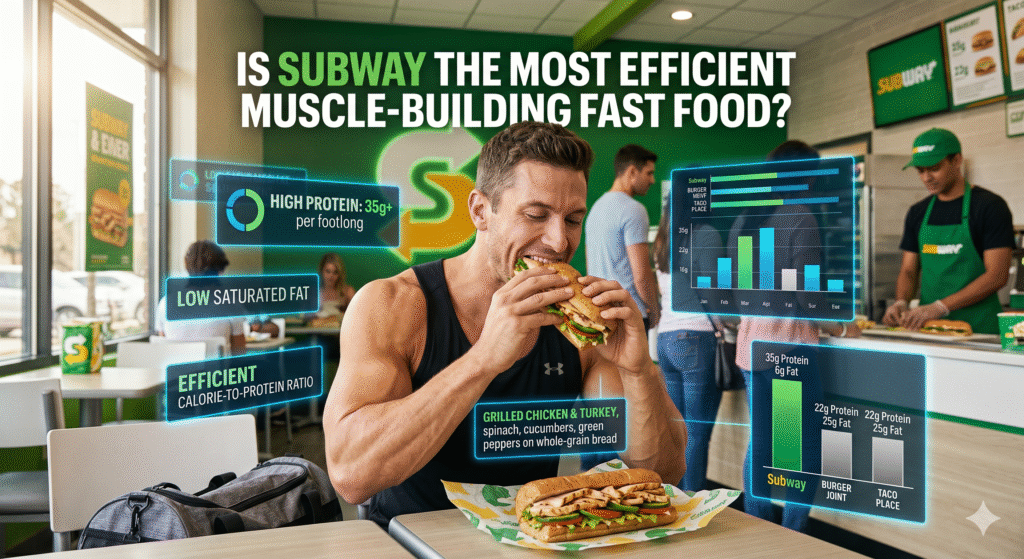
Is Subway the Most Efficient Muscle-Building Fast Food :For anyone serious about building muscle, fast food usually gets a bad reputation. But not all fast food is created equal. With the rising demand for high-protein, macro-friendly meals, Subway has emerged as a popular choice among gym enthusiasts, athletes, and bodybuilders looking for a quick, convenient, and affordable protein fix.
But is Subway truly the most efficient fast food option for muscle building? Or is it just clever marketing dressed in a “fresh” label? In this article, we break down the nutritional science, compare Subway against its competitors, and help you order the best muscle-building meal next time you step inside that familiar green-and-yellow restaurant.
Why Protein Is King for Muscle Building
Before diving into Subway’s menu, it’s important to understand what your muscles actually need to grow. Muscle hypertrophy — the process of muscle fibers getting larger — requires a consistent caloric surplus combined with adequate protein intake.
Most fitness experts and sports nutritionists recommend consuming 0.7 to 1 gram of protein per pound of body weight per day for muscle building. For a 180-pound individual, that’s roughly 126 to 180 grams of protein daily.
For fast food to be “efficient” for muscle building, it needs to deliver:
- High protein content relative to calories
- Moderate to high carbohydrates for glycogen replenishment
- Controlled fat content to avoid unnecessary calorie surplus
- Customization options to align with your specific macros
Subway checks several of these boxes — and we’re about to show you exactly how.
Subway’s Nutritional Strengths for Muscle Building
1. High Protein Options
Subway offers several protein-dense choices that can seriously support muscle growth. Here are some of the best options:
Subway Footlong Protein Counts (approximate):
| Sandwich | Protein (g) | Calories |
|---|---|---|
| Rotisserie-Style Chicken (footlong) | ~54g | ~560 |
| Steak & Cheese (footlong) | ~52g | ~680 |
| Turkey Breast (footlong) | ~46g | ~500 |
| Tuna (footlong) | ~40g | ~740 |
| Meatball Marinara (footlong) | ~38g | ~960 |
| Veggie Delite (footlong) | ~18g | ~350 |
The Rotisserie-Style Chicken and Steak & Cheese are standout performers, delivering over 50 grams of protein per footlong — a number that rivals many dedicated meal prep options.
2. Unmatched Customization
Unlike McDonald’s or Burger King, Subway gives you complete control over what goes into your meal. This is a game-changer for anyone tracking macros. You can:
- Double your protein by adding extra meat
- Remove high-calorie sauces and replace them with mustard or vinegar
- Load up on vegetables for added fiber, vitamins, and minerals
- Choose your bread based on your carbohydrate goals
- Go lettuce wrap or flatbread for a lower-carb option
This level of customization makes Subway one of the few fast food chains where you can genuinely engineer your meal for specific fitness goals.
3. Leaner Protein Sources
Subway predominantly uses lean meats such as turkey, chicken, and roast beef — proteins that are lower in saturated fat compared to the beef patties found in burgers. Lean protein is ideal for muscle building because it keeps your fat intake manageable while maximizing amino acid delivery to your muscles.
4. Fresh Vegetables
Adding spinach, cucumber, tomatoes, onions, green peppers, and other vegetables doesn’t just boost the micronutrient profile — it adds volume to your meal, helping you feel fuller longer without spiking your calorie count significantly.
The Best Subway Order for Muscle Building
If you’re walking into Subway with the goal of maximizing muscle gain, here’s a formula to follow:
The Ideal Muscle-Building Subway Meal
Base: 9-Grain Wheat Bread (footlong) — rich in complex carbohydrates for sustained energy and glycogen replenishment.
Protein: Double Rotisserie-Style Chicken or Steak — targets 50–70g+ of protein in one sitting.
Vegetables: Load up on spinach, tomatoes, cucumber, onions, and green peppers for micronutrients and fiber.
Sauce: Mustard or olive oil — avoid mayo and creamy sauces which can add 200+ unnecessary calories.
Add-on: A bag of Baked Lays or apple slices for additional carbohydrates post-workout.
Approximate Macros for This Meal:
- Calories: ~700–800 kcal
- Protein: 55–70g
- Carbohydrates: 80–100g
- Fat: 10–15g
This is an impressive macro breakdown for a fast food meal — one that many bodybuilders would be happy to see in their meal plan.
Subway vs. Competitors: Who Wins for Muscle Building?
Let’s see how Subway stacks up against other popular fast food chains on the key metric of protein per calorie — the efficiency measure for muscle building.
Subway vs. Chipotle
Chipotle is another fan favourite among the fitness community. A chicken burrito bowl with rice, black beans, and fajita vegetables can pack around 40–50g of protein at approximately 700–850 calories. It’s comparable to Subway, but Chipotle lacks the low-calorie breadless options Subway can offer. Chipotle also tends to be higher in sodium and fat depending on your toppings.
Winner: Roughly tied, with Subway edging ahead for those managing caloric intake more tightly.
Subway vs. McDonald’s
A McDonald’s Grilled Chicken Sandwich provides about 36g of protein at 470 calories — decent, but limited customization means you can’t easily scale up the protein. Adding a McDouble bumps your protein total, but also adds significant saturated fat.
Winner: Subway, by a comfortable margin.
Subway vs. Chick-fil-A
Chick-fil-A’s Grilled Nuggets (12-count) deliver 38g of protein at just 200 calories, making it arguably the most protein-efficient individual item at any fast food chain. However, building a complete muscle-building meal from Chick-fil-A requires more pairing and planning.
Winner: Chick-fil-A for pure protein efficiency per calorie on individual items; Subway for a complete, balanced meal.
Subway vs. Wingstop / Wing Joints
Chicken wings are high in protein but also notoriously high in fat. A 10-piece wing order might offer 50g of protein but with significantly more calories and saturated fat than a Subway footlong.
Winner: Subway for leaner muscle-building nutrition.
Limitations: Where Subway Falls Short
Despite its advantages, Subway is not without drawbacks for the muscle-building crowd:
Sodium Content
Subway sandwiches are often high in sodium — sometimes exceeding 1,200–1,800mg per footlong. While sodium is not directly harmful to muscle growth, excessive intake can cause water retention and may negatively affect cardiovascular health over time.
Tip: Opt for turkey or chicken over processed deli meats, and go easy on pickles and sauces to manage sodium levels.
Bread Calories
While the bread provides useful carbohydrates, it also adds up fast. A footlong on 9-Grain Wheat Bread alone contributes around 240 calories. If you’re in a cutting phase and trying to minimize carbs, going for a salad bowl or flatbread is a smarter choice.
Protein Quality
While Subway uses recognizable protein sources, some of their deli meats — like the classic Cold Cut Combo — are processed and contain fillers. Processed meats don’t offer the same amino acid completeness or bioavailability as whole food proteins like grilled chicken or steak.
Tip: Always prioritize the grilled/rotisserie proteins over processed deli meats.
Variable Portion Sizes
Unlike packaged foods, Subway’s ingredient portions can vary significantly between locations and employees. The amount of chicken you get in one visit may differ from the next, making it harder to track macros with precision.
Is Subway Good for Post-Workout Recovery?
Post-workout nutrition is crucial. Your muscles are primed to absorb nutrients after a training session, and delivering protein and carbohydrates within 30–90 minutes of working out can accelerate recovery and muscle protein synthesis.
A Subway footlong with double chicken and wheat bread does an excellent job of providing:
- Fast-digesting carbohydrates from the bread to replenish glycogen stores
- High-quality protein to initiate muscle repair
- Electrolytes from the various vegetables and condiments
For a post-workout meal on the go, Subway ranks among the best fast food options available.
Tips for Ordering Subway Like a Bodybuilder
Here are some pro tips for getting the most out of your Subway visit:
- Always go footlong — it doubles the protein at a fraction of the cost.
- Double your protein — most locations will add extra meat for an additional charge, but it’s well worth the investment.
- Skip the mayo and ranch — these sauces add 150–200 calories with little nutritional benefit. Choose mustard, olive oil, or hot sauce instead.
- Go heavy on the veggies — they’re virtually free calories and add fiber, vitamins, and volume to your meal.
- Pair with a protein shake if your daily protein needs are very high — a Subway footlong alone may not be sufficient for heavier lifters targeting 180g+ of protein per day.
- Check the nutrition calculator — Subway’s website and app allow you to build your sandwich and see the exact macros before you order.
Subway for Bulking vs. Cutting
Bulking Phase
During a bulk, your goal is to eat in a caloric surplus while maximizing protein intake. Subway is ideal here. Double-protein footlongs with hearty bread, avocado, and calorie-dense sauces can push a meal to 800–1,000+ calories with 60–80g of protein — a solid contribution to your daily surplus.
Cutting Phase
During a cut, every calorie counts. Subway’s salad bowl option allows you to keep the same high-protein proteins (chicken, turkey, steak) while eliminating the bread entirely. A chicken salad bowl at Subway can deliver 35–45g of protein at just 250–400 calories, making it one of the leanest fast food options available.
The Verdict: Is Subway the Most Efficient Muscle-Building Fast Food?
Short answer: It’s one of the best — but not necessarily the single most efficient.
Here’s where Subway truly excels:
- Exceptional customization for macro tracking
- Lean protein options (especially rotisserie chicken and steak)
- Viable for both bulking and cutting
- Affordable price point for high protein intake
- Availability and convenience
Where it falls short:
- High sodium in many offerings
- Inconsistent portion sizes
- Processed meats in some subs reduce protein quality
- Pure protein efficiency per calorie doesn’t quite match Chick-fil-A’s grilled options
For the average gym-goer who wants a convenient, customizable, high-protein meal that supports muscle growth without blowing their macros, Subway is arguably the most practical and well-rounded muscle-building fast food option. It beats the majority of competitors in flexibility, protein content, and the ability to adapt your order to specific fitness goals.
If you’re willing to make smart choices — double protein, wheat bread, vegetables, clean sauces — Subway can genuinely be a staple in a muscle-building diet.
Frequently Asked Questions (FAQs)
Q: Is Subway good for building muscle? Yes. Subway offers several high-protein, customizable options that can support muscle growth, particularly the Rotisserie-Style Chicken and Steak & Cheese footlongs.
Q: What is the highest protein Subway sandwich? The Rotisserie-Style Chicken footlong is among the highest, offering approximately 54g of protein. Adding a double portion of protein can push this to 70g or more.
Q: Can I eat Subway every day and still build muscle? Yes, if you’re consistently hitting your protein and calorie targets. However, for long-term health, variety in your diet is recommended to ensure a broader range of micronutrients.
Q: Is Subway better than McDonald’s for muscle building? Generally, yes. Subway offers more lean protein options, greater customization, and fewer processed ingredients compared to most McDonald’s offerings.
Q: What should I avoid at Subway when building muscle? Avoid high-calorie sauces like mayonnaise and ranch, processed deli meats like Cold Cut Combo, and excessive cheese if you’re in a caloric deficit phase.
Always consult with a registered dietitian or sports nutritionist for personalized nutrition advice tailored to your specific health and fitness goals.
Read also
Subway for Weight Loss: A Complete 7-Day Meal Plan Under 1500 Calories/Day