
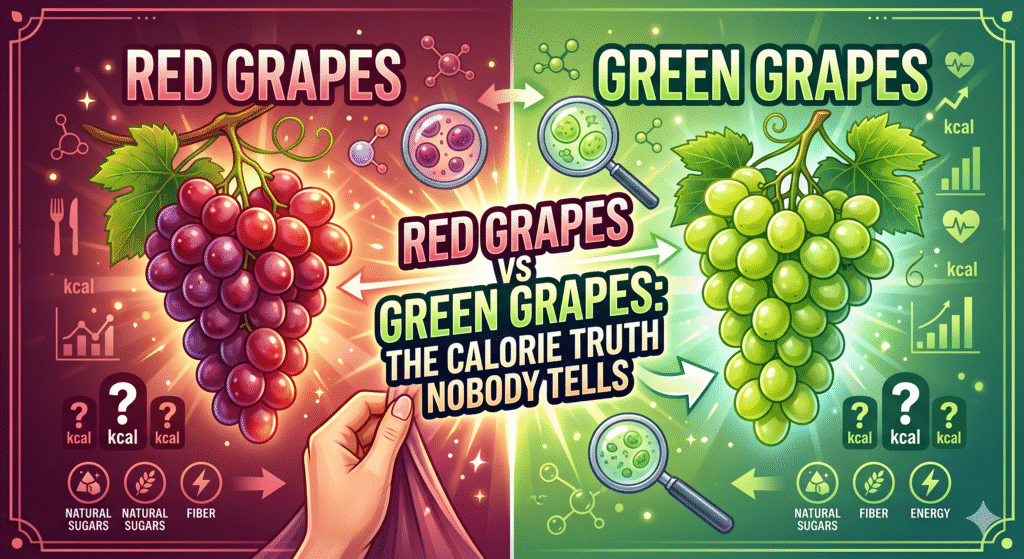
Red Grapes vs Green Grapes :If you’ve ever stood in the produce aisle wondering whether the color of your grapes matters for your waistline, you’re not alone. The red vs green grape debate is one of the most persistent nutrition questions out there. And the answer might surprise you.
The Verdict: No Calorie Difference
Let’s cut through the noise immediately: there is essentially no calorie difference between red and green grapes.
Both contain approximately 104 calories per cup (151g) . A medium-sized grape—whether red, green, or black—averages about 3.4 calories. You’d have to eat roughly 30 grapes to hit 100 calories.
So if you’re choosing between red and green based on calories alone, flip a coin. They’re virtually identical.
But Wait—There’s More to the Story
While the calorie count is the same, the nutritional profile is where the real difference lies.
Red and black grapes contain significantly more antioxidants than their green counterparts. This comes down to one thing: pigmentation.
The same compounds that give red grapes their deep, rich color—resveratrol and anthocyanins—are powerful antioxidants that offer additional health benefits. These compounds are concentrated in the skin of the grape, which is why darker grapes have a nutritional edge.
Green grapes aren’t lacking in nutrition entirely. They still contain beneficial compounds, just in smaller amounts. Their lighter skin means fewer of these pigmented antioxidants.
The bottom line: If you’re choosing grapes for health benefits, red or black grapes have a slight edge. If you’re choosing for calories, it doesn’t matter.
The Sneaky Math of Grape Snacking
Here’s where things get interesting—and where most people go wrong.
A single grape is only about 3.4 calories. That number is so small it feels insignificant. But here’s the trap: that low number is deceptive.
At roughly 30 grapes per 100 calories, grapes are one of the easiest fruits to overeat while watching TV or snacking casually. You reach into the bowl, grab a handful, and before you know it, you’ve eaten 200 calories without even thinking about it.
Portion control matters more than color choice. A cup of grapes contains about 104 calories. A large bowl of grapes can easily contain 300–400 calories. The difference between a mindful portion and an absent-minded snack can be the difference between a 100-calorie snack and a 400-calorie one.
The Raisin Trap: The Most Practical Insight
If you really want to understand grape calories, you need to understand raisins. This is where the math gets shocking.
| Serving Size | Calories |
|---|---|
| 1 cup fresh grapes | ~104 |
| 1 cup raisins | ~493 |
That’s right—a cup of raisins has nearly 5 times the calories of a cup of fresh grapes (493 vs 104).
Here’s why: drying removes water but concentrates all the sugar and energy into a smaller, less filling volume. You can eat a cup of grapes and feel reasonably full. You can eat a cup of raisins and barely notice, while consuming nearly 500 calories.
The practical takeaway: For weight management, choose fresh grapes over raisins every time.
Practical Tips for Grape Lovers
Measure Your Portion
Don’t snack straight from the bunch. Measure a cup of grapes (about 151g) and put the rest away. This simple habit can save you 100+ calories per snack session.
Prefer Fresh Over Dried
Fresh grapes are hydrating, filling, and lower in calories per volume. Dried grapes (raisins) are calorie-dense and easy to overeat.
Consider Freezing Them
Frozen grapes are a game-changer. They take longer to eat, which naturally slows down your eating pace. You’ll feel satisfied with fewer grapes. Plus, they’re a refreshing snack on a hot day.
Pair With Protein
Grapes are high in sugar and low in protein. Pair them with a source of protein (like cheese or nuts) to balance blood sugar and stay fuller longer.
Don’t Overthink Color
If calories are your only concern, choose whichever color you prefer. The calorie difference is negligible. If antioxidants matter to you, choose red or black grapes.
The Bottom Line
Red and green grapes have the same calories: about 104 per cup. The color difference matters for antioxidants—not calories. Red and black grapes contain more resveratrol and anthocyanins, which are beneficial compounds found in the pigmented skin.
The real calorie trap isn’t the color—it’s the portions. A single grape is only 3.4 calories, but eating 30 grapes adds up to 100 calories. And raisins? A cup has nearly 500 calories—about 5 times more than fresh grapes.
For weight management, the smartest approach is simple: measure your portion, prefer fresh over dried, and don’t snack from the bunch. The color of your grapes is far less important than how many you eat.
Frequently Asked Questions
Q: Which has more calories—red or green grapes?
Neither. Both red and green grapes contain about 104 calories per cup (151g). There is essentially no calorie difference between them.
Q: Are red grapes healthier than green grapes?
Red grapes contain more antioxidants (resveratrol and anthocyanins) due to their pigmented skin. This gives them a slight nutritional edge, but the difference is not massive.
Q: How many grapes are in a serving?
A standard serving is about 1 cup or 151g, which is roughly 30 grapes. This contains approximately 104 calories.
Q: How many calories are in a single grape?
A medium-sized grape contains about 3.4 calories.
Q: Are raisins more fattening than fresh grapes?
Yes. Raisins have nearly 5 times more calories per cup than fresh grapes (493 vs 104). Drying concentrates the sugar and calories into a smaller, less filling volume.
Q: Is it better to eat grapes or avoid them for weight loss?
Grapes are a healthy snack in moderation. They’re hydrating, contain antioxidants, and can be part of a balanced diet. The key is portion control—measure a cup rather than snacking from the bunch.
Q: Should I choose red or green grapes for weight loss?
The color doesn’t matter for weight loss. Both have the same calories. Choose whichever you prefer, but focus on portion size.
Read also
How to Build a Sub Under 400 Calories: The Ultimate Guide to a Guilt-Free Hoagie